Impulse Spending: Why It Happens and 7 Ways to Stop It in 2026
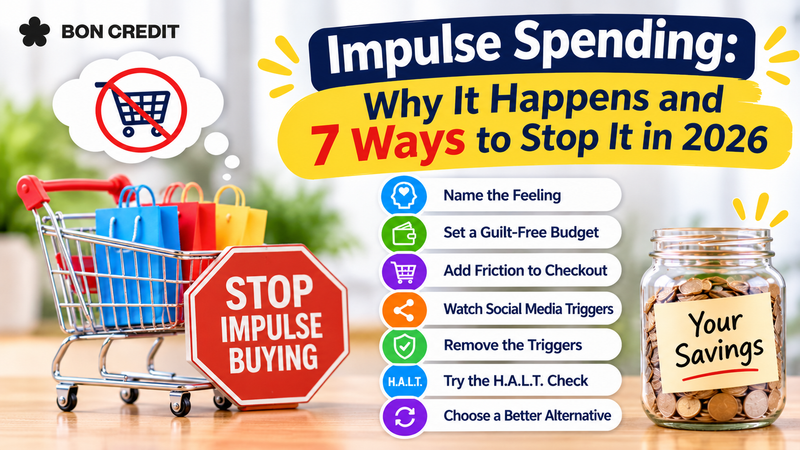
Impulse spending is an unplanned purchase driven by emotional triggers and easy checkout, not by need. It affects most shoppers at least occasionally. The good news is that it follows patterns, so you can interrupt it with a few deliberate habits.
Key Takeaways
Impulse spending is buying in the moment because of a feeling, not a plan.
Most people do it. Many regret it afterward.
Name the feeling, set a guilt-free limit, and add friction to checkout.
Social media is now a major trigger, especially for Gen Z.
Try the H.A.L.T. check and the 24-hour rule before you buy.
What Is Impulse Spending?
Impulse spending is an unplanned purchase made in the moment, driven by emotion and instant gratification rather than need.
It’s common. PartnerCentric’s March 2026 survey found that 81% of U.S. consumers have made at least one impulse purchase so far this year, with a median spend of $50 per purchase.
Three things usually sit behind it:
A dopamine rush. The anticipation of buying feels good, sometimes better than owning the item.
Self-soothing. Shopping becomes a quick fix for stress or boredom.
Present bias. Your brain favors the reward now over your goals later.
How Do You Recognize Impulse Spending Tendencies?
Ask yourself four questions:
Was the purchase on a list, or did it just appear in your cart?
Did you buy it to escape a mood like stress, boredom, or sadness?
Did you regret it within hours or days?
Did you put on a credit card something that could have waited?
Two yeses mean you’re probably dealing with impulse buying. The same survey found that 62% of consumers regret their impulse purchases at least sometimes, and 34% say these purchases cause financial stress. Use those numbers as a yardstick.
7 Ways to Overcome Impulse Spending
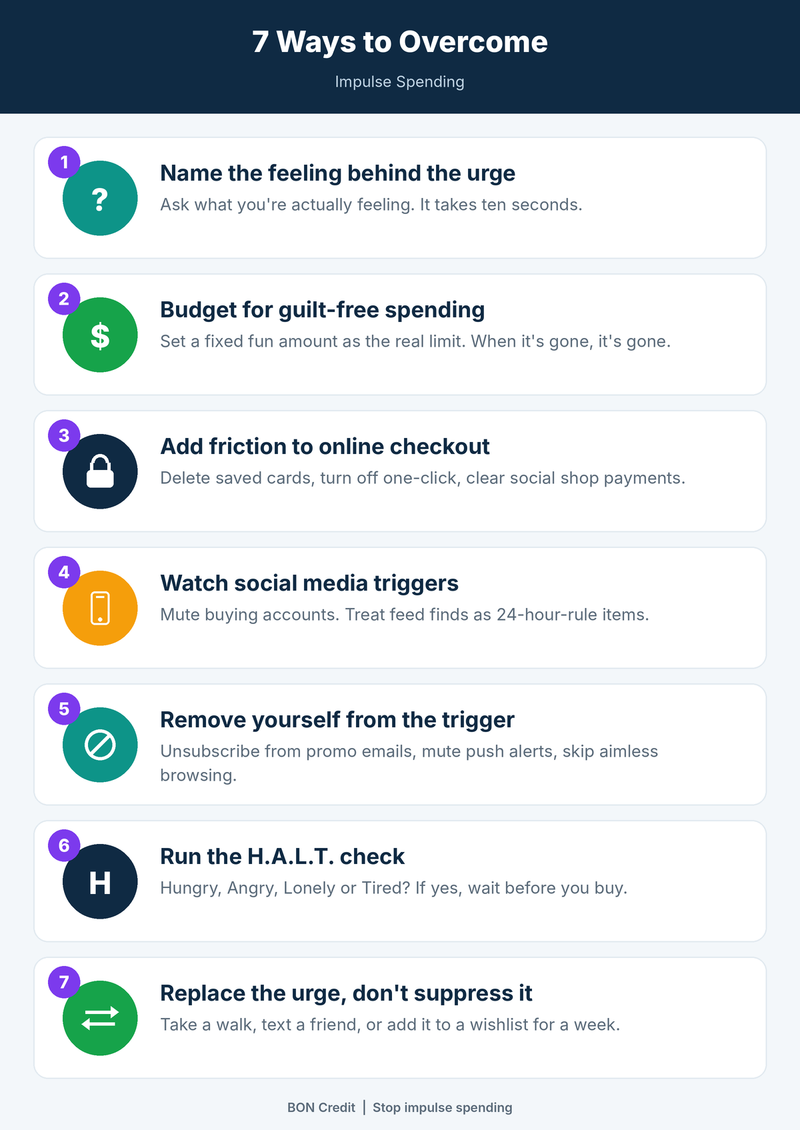
1. How Do You Name the Feeling Behind the Urge?
Pause and ask: “What am I actually feeling right now?” Most impulse spending triggers trace back to a mood, such as stress, boredom, loneliness, or a rough day.
Naming the feeling interrupts the automatic reach for checkout. It takes ten seconds, and it often shows you the purchase isn’t about the item at all.
2. How Do You Build a Budget With Room for Guilt-Free Spending?
Give fun purchases a defined limit. A budget that bans every treat usually collapses, and then spending has no ceiling at all.
Here’s the setup. Separate your essentials, like rent, bills, and groceries. Then set a fixed discretionary amount. Treat that amount as the real limit for spontaneous buys. When it’s gone, it’s gone.
For the full steps, read the key components of successful budgeting.
3. How Do You Add Friction Back Into Online Checkout?
Make buying slightly harder. Retailers removed friction on purpose to shrink the gap between wanting and buying. Adding it back restores the pause.
Delete saved card details from browsers and shopping apps.
Turn off one-click and express checkout.
Remove stored payment info from social shopping platforms.
4. Why Should You Watch for Impulse Triggers on Social Media?
Because social apps are built to cut the path from seeing to buying down to almost zero steps. In-app shops, creator links, and short videos all push you toward checkout.
The numbers back this up. According to the same PartnerCentric survey, 49% of Gen Z have made an impulse purchase directly on social media. TikTok leads at 43%, ahead of Instagram at 27%.
Try this: unfollow or mute accounts that make you buy often. Treat anything you see in a feed as a 24-hour-rule item by default. That means you wait a full day before buying.
5. How Do You Remove Yourself From the Trigger Before You Decide?
Cut off the source. Unsubscribe from promotional emails and mute retailer push notifications. Skip browsing stores, online or in person, when you have no specific item in mind.
This is a habit-level fix. It works before you ever reach the checkout page.
6. What Is the H.A.L.T. Check, and How Does It Help?
H.A.L.T. is a quick check before you shop: are you Hungry, Angry, Lonely, or Tired?
Each of these states lowers your self-control. If any applies, wait. Checking in first, online or in a store, catches the risk before it becomes a purchase.
7. How Can You Replace the Urge Instead of Just Suppressing It?
Redirect it. Fighting an urge head-on is hard to keep up, and it usually fails.
Try a quick, low-cost swap instead:
Take a short walk.
Text a friend.
Add the item to a wishlist and revisit it in a week.
The urge fades, and the wishlist is often forgotten, which tells you something.
Seeking Support: How BON Credit Strengthens Your Budgeting
BON Credit is a free AI powered financial assistant that tracks every spending category in real time and builds your budget automatically.
That matters for strategy two. A guilt-free limit only works if you can see it shrinking. Real-time tracking shows your discretionary balance as you spend it, not weeks later. It also lets you track impulse purchases separately, so you see exactly where they go.
BON Credit also surfaces forgotten subscriptions and refunds. That money can grow your guilt-free allowance without cutting into essentials.
Pay and manage all your credit cards, budget, track, and earn, all in one app.
Download BON Credit for free and make your spending limit visible.
FAQs
How do I stop impulse spending fast?
Wait 24 hours before buying anything you didn’t plan to. Most urges fade by then.
Why do I buy things I don’t need?
Usually it’s a feeling, like stress or boredom, not a need. Buying gives a quick lift, and your brain remembers it.
What is the 24-hour rule?
It means waiting a full day before buying a non-essential item. If you still want it tomorrow, you can buy it with a clearer head.
Is impulse buying always bad?
No. A small, planned treat inside your budget is fine. It’s a problem when it’s unplanned and you regret it.
Bottom Line
Impulse spending isn’t a willpower failure. It’s a predictable response to emotional triggers and a retail system built to be frictionless. That means deliberate countermeasures work.
Remember the number: 81% of consumers have made an impulse purchase this year. This affects nearly everyone, not just a few.
If you want your guilt-free spending limit visible in real time, try BON Credit.

Samder Khangarot
Samder Khangarot is the CEO and co-founder of Bon Credit, a free AI that helps people find money, pay off debt, and build credit. He is a Stanford Graduate School of Business alum.